
Quick Answer: Maintaining a care home’s CQC rating requires more than standard janitorial work; it demands a technical approach to Regulation 15 and infection control.
In the care sector, cleanliness is not an aesthetic choice—it is a regulatory requirement and a fundamental pillar of resident safety. For care home managers in Luton, Dunstable, and throughout Bedfordshire, the pressure of a CQC (Care Quality Commission) inspection is constant. A single failure in hygiene standards doesn't just result in a 'Requires Improvement' rating; it jeopardises the health of vulnerable residents and the reputation of the business.
At Sanctuary Serene Clean Ltd, we understand that healthcare cleaning is about risk management. Whether you are preparing for an unannounced inspection or managing a seasonal norovirus outbreak, the difference between a compliant facility and a failing one lies in the technical execution of cleaning protocols. This guide breaks down exactly what is required to meet UK standards and how we help local providers maintain peak operational readiness.
The High Stakes of Care Home Hygiene in Bedfordshire
The local landscape for social care is under increasing scrutiny. The Bedfordshire, Luton and Milton Keynes Integrated Care Board (BLMK ICB) has recently prioritised Infection Prevention and Control (IPC) training, highlighting the regional focus on reducing healthcare-associated infections. For a care home provider, the 'Safe' key question during a CQC assessment is often won or lost on the visible and documented state of the premises.
When hygiene fails, the costs are literal and figurative. Staff absence increases due to cross-infection, bed occupancy may drop if a home is forced to close to new admissions during an outbreak, and the administrative burden of correcting a poor inspection report can take months of management time. Preventing these issues requires a move away from 'domestic-style' cleaning toward a clinical-grade service.
Understanding CQC Regulation 15: Beyond Surface Cleaning
Regulation 15 of the Health and Social Care Act 2008 (Regulated Activities) Regulations 2014 is the primary benchmark for care home environments. It states that premises and equipment must be clean, secure, suitable for purpose, and properly maintained. To satisfy a CQC inspector, your cleaning regime must address several specific criteria:
- Visibility and Odour: The premises must be visibly clean and free from offensive or unpleasant odours. This requires deep extraction cleaning of carpets and upholstery, which frequently trap organic matter.
- Appropriate Methods: Using the wrong chemical for a specific surface isn't just ineffective; it can be a breach of compliance. We ensure that every agent used is appropriate for the care environment and documented under COSHH (Control of Substances Hazardous to Health).
- Monitoring and Action: It is not enough to clean; you must prove that you monitor cleanliness. Inspectors look for evidence that shortfalls are identified and corrected without delay.
For more details on these legal requirements, providers should refer directly to the CQC guidance on Regulation 15.
Infection Prevention and Control (IPC): Breaking the Chain
While Regulation 15 covers the environment, Regulation 12 focuses on 'Safe care and treatment,' specifically the prevention of infection. In a care home setting, the chain of infection is often broken at the surface level. Pathogens like Norovirus, MRSA, and Influenza can survive on hard surfaces for days.
High-Touch Point Disinfection
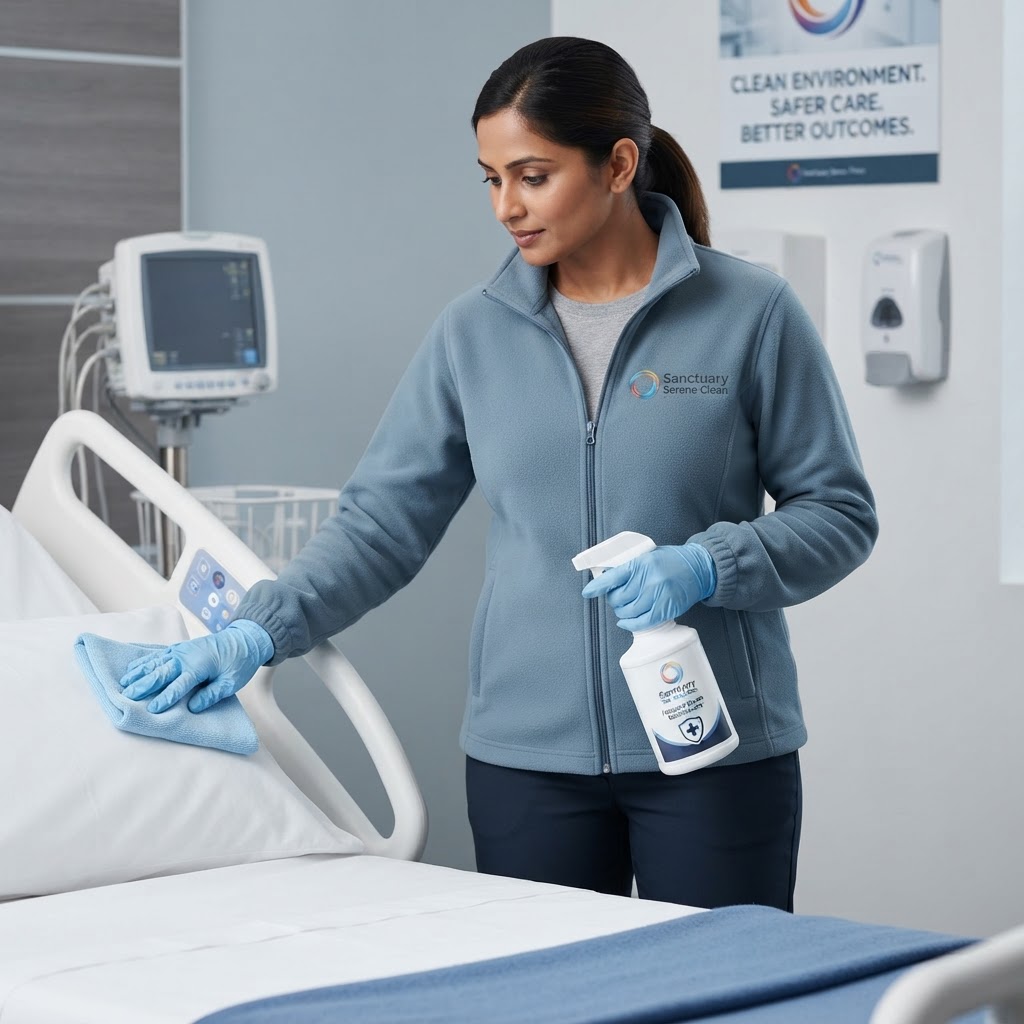
A standard cleaning schedule often misses the most dangerous areas. Our protocols focus heavily on 'high-touch points'—the surfaces most frequently contacted by residents, staff, and visitors. These include:
- Door handles and push plates
- Bed rails and hoist controls
- Light switches and call bells
- Armrests on communal seating
- Handrails in corridors and bathrooms
By using medical-grade virucidal cleaners with the correct contact time, we ensure these vectors of transmission are neutralised daily.
Terminal Cleaning
When a resident falls ill, the cleaning requirements change instantly. Terminal cleaning involves the deep disinfection of a room after an infectious occupant has left or recovered. This is a meticulous process that includes every surface from floor to ceiling, including the laundering of curtains and the deep cleaning of all medical equipment within the room.
The Operational Reality: Color Coding and Chemical Competence
To avoid cross-contamination—the act of moving bacteria from a bathroom to a kitchen area—we strictly follow the British Institute of Cleaning Science (BICSc) colour-coding system. This is a standard recognised by the BICSc and the NHS to ensure safety in clinical environments.
The Four-Color System
- Red: Bathrooms, washrooms, floors, toilets, and sinks.
- Yellow: Bedrooms and clinical areas (excluding toilets).
- Blue: General areas, including offices and lounges.
- Green: Kitchens and food preparation areas.
Every piece of equipment, from microfibre cloths to mop heads and buckets, is colour-coded. This provides a visual safeguard that our operatives are trained to follow without exception. This level of discipline is what separates professional healthcare cleaners from general commercial services.
Documentation: If It Isn’t Logged, It Didn’t Happen
In the eyes of the CQC, a lack of documentation is equivalent to a lack of cleaning. We provide our clients with comprehensive audit trails. This includes cleaning schedules, deep-clean certificates, and COSHH data sheets. When an inspector asks, "How do you ensure the communal lounge was sanitised after the flu outbreak?", you can produce a dated, signed, and verified log of exactly what was done and which chemicals were used.
We also recommend that care home managers maintain regular internal audits. By comparing our cleaning logs with your clinical outcome data (such as infection rates), you can build a robust case for 'Outstanding' governance during your next assessment.
Why In-House Teams Struggle (and How We Help)
Many care homes in Bedfordshire and Hertfordshire rely on in-house domestic teams. While these staff members are often dedicated, they face significant challenges: high turnover, lack of specialist equipment, and limited training in the latest IPC protocols. Managing an in-house team also adds to the HR and training burden of the home manager.
Outsourcing to Sanctuary Serene Clean Ltd removes this friction. We bring the expertise, the chemicals, and the industrial equipment needed for tasks like steam cleaning and high-level disinfection. We act as a partner in your compliance, allowing your care staff to focus entirely on the residents while we handle the technical environment. For a broader look at how professional cleaning supports business operations, see our guide on commercial cleaning assessments.
Frequently Asked Questions
What are the CQC requirements for care home cleaning?
The CQC requires care homes to meet Regulation 15 (Premises and Equipment) and Regulation 12 (Safe Care and Treatment). This means the home must be visibly clean, free from odours, have documented cleaning schedules, use trained staff, and have robust infection control measures in place to prevent the spread of healthcare-associated infections.
How often should a care home have a deep clean?
While daily maintenance is essential, a full environmental deep clean is typically recommended at least twice a year, or immediately following an infectious outbreak. High-traffic areas and communal carpets may require more frequent deep cleaning to maintain hygiene and safety standards.
Does your cleaning staff have DBS checks?
Yes. Because we operate in environments with vulnerable adults, all Sanctuary Serene Clean Ltd staff undergoing healthcare assignments are subject to Enhanced DBS (Disclosure and Barring Service) checks to ensure the safety and security of your residents.
What chemicals do you use for infection control?
We use BS EN 1276 and BS EN 14476 certified disinfectants and virucides. These are proven to kill 99.9% of pathogens, including Norovirus, MRSA, and Coronaviruses, provided the correct contact time is observed by the operative.
Do you provide cleaning services in St Albans and Hemel Hempstead?
Yes, Sanctuary Serene Clean Ltd serves the entire region, including Luton, Bedford, Dunstable, St Albans, Hemel Hempstead, and the surrounding areas of Bedfordshire and Hertfordshire.
Take the First Step Toward a Higher CQC Rating
Don't wait for an inspection notification to find the gaps in your cleaning regime. Proactive management is the only way to ensure compliance and resident safety. We offer a specialized site assessment designed to identify risks in your current setup and provide a clear, technical roadmap to meeting National Standards of Healthcare Cleanliness.
Secure your facility's reputation today. Contact Sanctuary Serene Clean Ltd at 07949 919925 or email info@sanctuarysereneclean.com. To book your specific review, visit our Care Home Assessment page.
Frequently Asked Questions
What are the CQC requirements for care home cleaning?
The CQC requires care homes to meet Regulation 15 (Premises and Equipment) and Regulation 12 (Safe Care and Treatment). This means the home must be visibly clean, free from odours, have documented cleaning schedules, use trained staff, and have robust infection control measures in place to prevent the spread of healthcare-associated infections.
How often should a care home have a deep clean?
While daily maintenance is essential, a full environmental deep clean is typically recommended at least twice a year, or immediately following an infectious outbreak. High-traffic areas and communal carpets may require more frequent deep cleaning to maintain hygiene and safety standards.
Does your cleaning staff have DBS checks?
Yes. Because we operate in environments with vulnerable adults, all Sanctuary Serene Clean Ltd staff undergoing healthcare assignments are subject to Enhanced DBS (Disclosure and Barring Service) checks to ensure the safety and security of your residents.
What chemicals do you use for infection control?
We use BS EN 1276 and BS EN 14476 certified disinfectants and virucides. These are proven to kill 99.9% of pathogens, including Norovirus, MRSA, and Coronaviruses, provided the correct contact time is observed by the operative.
Do you provide cleaning services in St Albans and Hemel Hempstead?
Yes, Sanctuary Serene Clean Ltd serves the entire region, including Luton, Bedford, Dunstable, St Albans, Hemel Hempstead, and the surrounding areas of Bedfordshire and Hertfordshire.
Sanctuary Danso
Sanctuary Danso is the Founder of Sanctuary Serene Clean, a professional cleaning company based in Luton. He specialises in commercial cleaning, healthcare cleaning, office cleaning, end-of-tenancy cleaning and after-builders cleaning. Through practical industry knowledge and customer-focused service, he helps businesses and organisations maintain cleaner, healthier and more welcoming environments.