
Quick Answer: Effective office cleaning in Hertfordshire for hybrid teams requires transitioning from static schedules to footfall-based zonal cleaning. Focus resources on high-traffic areas and high-touch point disinfection (HTP) during peak mid-week periods. Implementing a 'Clean Desk Policy' and using BS EN 1276 compliant chemicals ensures a hygienic environment that reduces absenteeism and supports workplace safety regulations.
The Evolution of the Flitwick Office Environment
The traditional five-day office week is no longer the standard for businesses operating near the Flitwick train station or across the broader Bedfordshire business hubs. While the shift to hybrid working has offered flexibility for employees commuting into London or working locally, it has created a significant challenge for facility managers: cleaning schedules are often out of sync with actual footfall. Many offices in Flitwick hold static contracts, providing the same level of service on a quiet Friday as they do during the busy mid-week rush. This leads to wasted budget on empty rooms and insufficient hygiene in high-traffic zones when your team is actually on-site.
The Real Cost of Sub-Standard Office Hygiene
Inadequate cleaning is more than an aesthetic issue; it is a financial one. From businesses located in the industrial estates to professional firms in Flitwick town centre, staff health is a priority. When cleaning is neglected, viruses and bacteria spread rapidly through high-touch points. This results in increased absenteeism, which directly impacts the productivity of your local team and your bottom line.
Why Generic Cleaning Schedules Fail Hybrid Teams
If your cleaning team follows a rigid checklist regardless of occupancy, you are likely overpaying for low-impact tasks. For example, vacuuming a boardroom that remained empty while staff were working remotely is a waste of resources, whereas shared kitchenettes and washrooms used by a full team on a Wednesday may require a double-cycle of disinfection. Effective office cleaning in Flitwick now requires a 'zonal' approach, focusing resources exactly where your employees are working.
The Foundations of an Effective Office Cleaning Strategy
To move away from generic service toward a strategy that protects your Bedfordshire staff and your investment, focus on these core pillars:
1. High-Touch Point Disinfection (HTP)
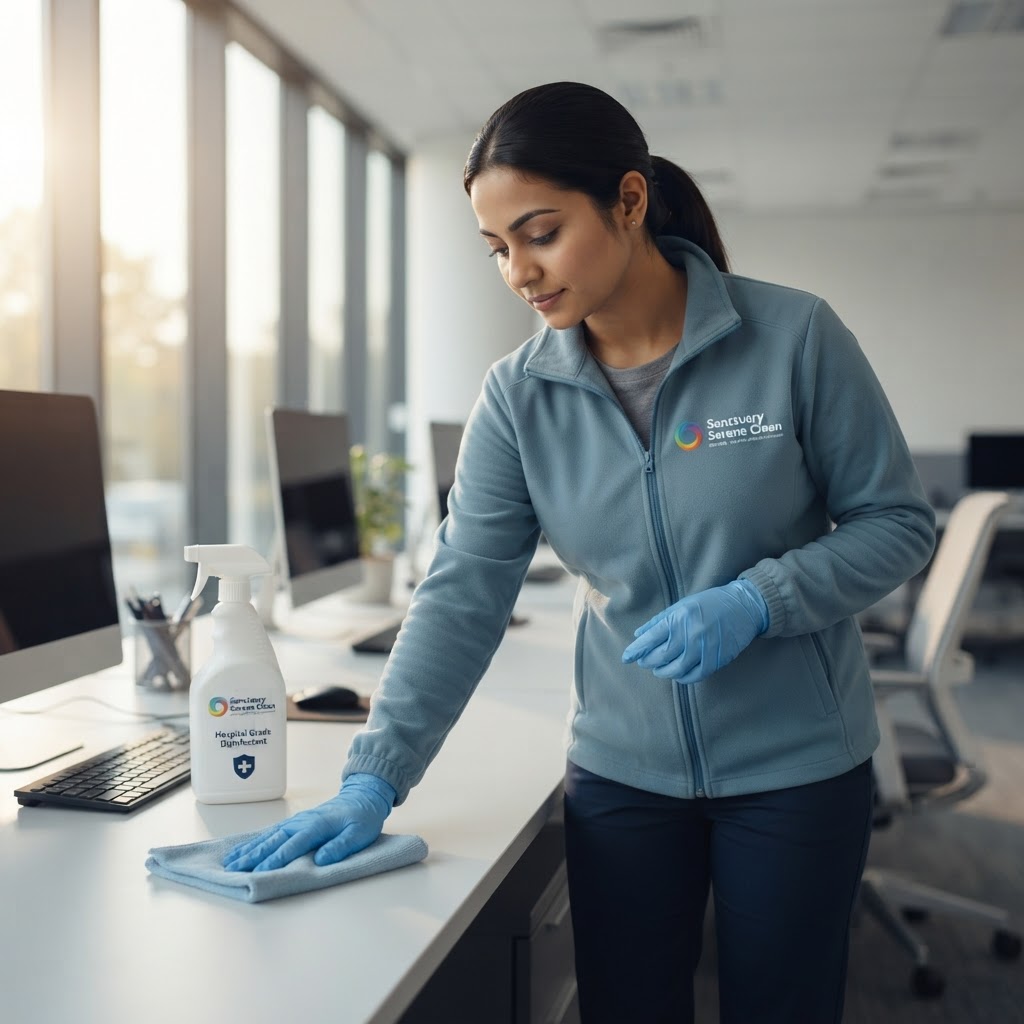
The most dangerous areas in an office aren't always the ones that look the dirtiest. A shared keyboard or common touch-screen can harbour more bacteria than a toilet seat if not sanitised correctly. A professional cleaning schedule for your Flitwick office should prioritise HTP sanitisation to keep your workspace safe and hygienic.
Frequently Asked Questions
Why are standard office cleaning schedules failing hybrid teams?
Standard schedules are often static, providing the same service regardless of office occupancy. In hybrid models, this leads to wasted budget on empty rooms while high-traffic zones lack sufficient hygiene during peak days. A 'zonal' approach ensures resources are allocated where staff are actually working, optimising both hygiene and budget.
What are high-touch points in an office environment?
High-touch points (HTPs) are frequently handled surfaces like door handles, lift buttons, kettle handles, and printer buttons. These areas harbour significant bacteria and require frequent sanitisation with BS EN 1276 or 14476 compliant chemicals to prevent cross-infection and reduce staff illness, which is vital for maintaining productivity in Hertfordshire businesses.
How does hot-desking impact office hygiene?
Hot-desking increases cross-contamination as multiple people use the same workstation throughout the week. Without a 'Clean Desk Policy,' items like monitors and mugs prevent thorough sanitisation. Clearing desks daily allows professional cleaners to disinfect the entire surface, potentially reducing surface-borne bacteria by up to 90% and improving overall office safety.
Why is deep cleaning important for office kitchens and washrooms?
Communal areas are high-risk zones for germs. In Hertfordshire offices, hard water can lead to limescale build-up, while poor ventilation exacerbates hygiene issues. Deep-cleaning grout, descaling taps, and sanitising microwave interiors are essential to maintain standards, satisfy employees, and comply with Workplace (Health, Safety and Welfare) Regulations.
Sanctuary Serene Clean
Sanctuary Serene Clean is a professional commercial cleaning company based in Luton, Bedfordshire, specialising in CQC-aligned healthcare cleaning, end-of-tenancy deep cleans, Airbnb turnover services, and workplace hygiene solutions. With fully trained, DBS-checked staff and documented quality systems, we help businesses pass inspections, protect their reputation, and maintain pristine environments across Bedfordshire, Hertfordshire and Buckinghamshire.