
Quick Answer: Learn how professional office cleaning impacts productivity, health, and HSE compliance for businesses in Luton and across Bedfordshire and Hertfordshire.
The Hidden Impact of Workplace Cleanliness on Business Performance
In the competitive business landscapes of Luton, Bedford, and St Albans, the physical environment of an office is often viewed through the lens of aesthetics. However, the true value of professional office cleaning services Luton businesses rely on goes far beyond a tidy appearance. A clean office is a fundamental component of operational efficiency and employee wellbeing. When a workspace is neglected, the costs manifest in subtle but expensive ways: increased staff absenteeism due to the spread of seasonal illnesses, decreased morale as employees navigate cluttered or unhygienic communal areas, and even the premature wear of expensive office assets like carpets and electronic equipment.
Maintaining a professional standard requires a shift from 'reactive cleaning'—addressing messes only when they become visible—to a proactive hygiene strategy. This guide outlines the essential components of a high-standard cleaning regime and how business owners in Bedfordshire and Hertfordshire can audit their current provision to ensure it meets health and safety requirements and supports a productive workforce.
Identifying High-Risk Areas in Your Luton Office
Every office has unique requirements based on its layout and headcount, but certain areas consistently represent the highest risk for bacterial transmission and grime buildup. Identifying these 'hot zones' is the first step in developing an effective cleaning specification.
The 'Touchpoint' Audit: Where Bacteria Hides
Research into workplace hygiene frequently highlights that the most contaminated surfaces are often those that appear clean. In a typical office environment, high-traffic touchpoints include door handles, elevator buttons, light switches, communal printer buttons, and kettle handles. Without a targeted disinfection protocol, these surfaces become vectors for pathogens. A professional cleaning service does not just wipe these surfaces; it applies appropriate disinfectants with sufficient dwell time to ensure microbial reduction.
Desks and Workstations
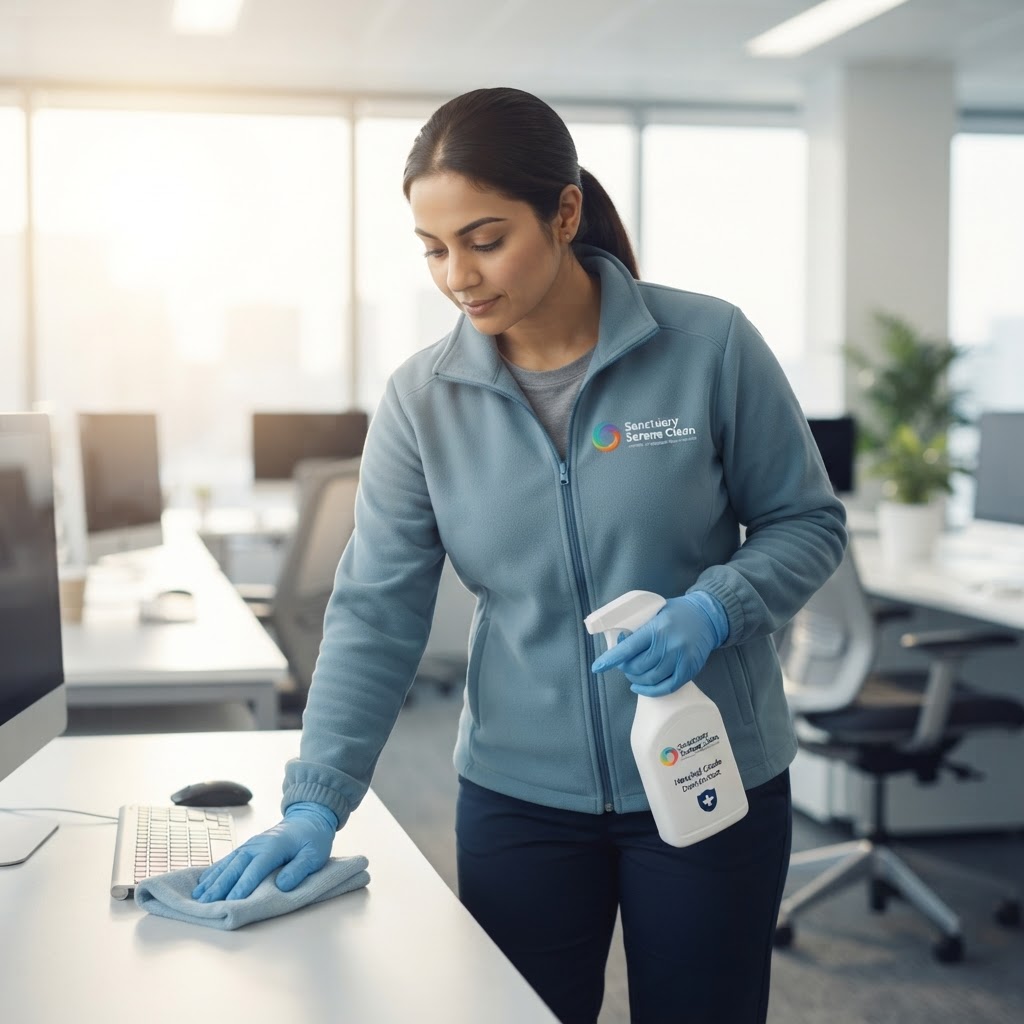
The average office desk can harbor significantly more bacteria than a toilet seat, primarily because desks are personal spaces where employees eat, cough, and spend the majority of their day. Professional office cleaning services Luton providers must focus on sanitising keyboards, mice, and telephone handsets using specialised cleaners that do not damage sensitive electronics. Dust accumulation in computer vents can also lead to hardware overheating, making regular dusting of IT equipment a matter of maintenance as well as hygiene.
Developing a Custom Cleaning Specification: Input vs. Output
When seeking office cleaning services in Luton or Hertfordshire, business owners often choose between input-based and output-based contracts. Understanding the difference is vital for achieving the desired standard.
- Input-Based Contracts: These specify the tasks and the time to be spent (e.g., 'vacuum the carpets for 20 minutes'). The risk here is that if a task takes longer, it may be rushed or skipped.
- Output-Based Contracts: These specify the desired result (e.g., 'carpets must be free of debris and visible stains daily'). This model focuses on the quality of the environment rather than just the clock, allowing for a more flexible and effective service.
For most Luton businesses, a hybrid approach works best, ensuring that essential tasks are completed while maintaining a high standard of finish across the board.
Washroom Management: Beyond the Surface Clean
Washrooms are the most critical area for any commercial cleaning assessment. A poorly maintained washroom is not only an HSE concern but also the quickest way to lower employee satisfaction and client perception. A professional protocol involves more than just emptying bins and replacing toilet rolls. It includes the deep cleaning of grout lines where bacteria can flourish, the descaling of taps and urinals to prevent unpleasant odours, and the regular sanitisation of hand-contact points like flush handles and soap dispensers.
Furthermore, the use of colour-coded cleaning equipment—a standard set by the British Institute of Cleaning Science (BICSc)—is non-negotiable. This prevents cross-contamination between washrooms and food preparation areas, a critical safety measure that any reputable office cleaning service in Luton must follow.
Kitchen and Breakroom Protocols
The office kitchen is a communal hub and a primary site for cross-contamination. Unlike residential kitchens, office breakrooms handle high volumes of food prep in short bursts. Cleaning schedules must include the internal and external cleaning of microwaves, the sanitisation of fridge handles, and the thorough scrubbing of sinks. Periodic fridge clearances are also essential to prevent the buildup of expired food and the associated bacterial growth.
The Role of Professional Equipment and Chemicals
High-standard office cleaning is not achieved with domestic-grade tools. Professional contractors use commercial vacuum cleaners equipped with HEPA (High-Efficiency Particulate Air) filters. These filters are essential for trapping fine dust and allergens, significantly improving indoor air quality—a vital consideration for employees with asthma or allergies. Similarly, the use of professional-grade chemicals ensures that surfaces are not only clean to the eye but are also hygienically safe, adhering to the Control of Substances Hazardous to Health (COSHH) regulations.
Health and Safety Compliance for Commercial Premises
In the UK, the Health and Safety Executive (HSE) provides clear guidelines on workplace health, safety, and welfare. Regulation 9 of the Workplace (Health, Safety and Welfare) Regulations 1992 specifically requires that every workplace, including its furniture and fittings, be kept sufficiently clean. Failure to maintain these standards can lead to formal notices or fines, particularly in sectors where hygiene is strictly monitored. By partnering with a professional service like Sanctuary Serene Clean Ltd, businesses ensure they remain compliant with these statutory obligations.
Regular audits are a key part of this compliance. A commercial cleaning assessment allows business owners to identify gaps in their current regime and adjust frequencies or tasks to match the actual usage of the building. This data-driven approach ensures that budgets are allocated where they are most needed, rather than spent on unnecessary tasks.
Why Local Expertise Matters in Bedfordshire and Hertfordshire
Choosing a local provider for office cleaning services in Luton offers logistical advantages. Local teams are more responsive to emergency call-outs, such as spills or preparations for an unexpected client visit. Furthermore, a provider who understands the local business landscape—from the busy commercial hubs near Luton Airport to the professional service firms in St Albans—can tailor their approach to the specific needs of the region's diverse industries.
For businesses looking to elevate their workplace environment, the first step is an honest appraisal of the current state of the office. Sanctuary Serene Clean Ltd offers detailed assessments to help businesses transition from basic cleaning to a high-standard hygiene management program.
To ensure your workspace reflects the professionalism of your brand and protects the health of your team, consider booking a professional evaluation of your current cleaning requirements.
Contact Sanctuary Serene Clean Ltd today at 07949 919925 or email info@sanctuarysereneclean.com to discuss your needs. You can also request a comprehensive review via our commercial cleaning assessment page.
Frequently Asked Questions
How often should a Luton office be cleaned?
The frequency depends on your headcount and the nature of your work. High-traffic offices typically require daily cleaning of washrooms, kitchens, and communal areas, while smaller offices may find three times a week sufficient. A professional assessment can determine the optimal schedule for your specific premises.
What is included in a standard office cleaning contract?
A standard contract usually covers vacuuming, floor mopping, dusting of surfaces, waste removal, and the thorough cleaning and sanitisation of washrooms and kitchens. Specialized tasks like window cleaning or carpet shampooing are often scheduled as periodic add-ons.
Can you clean offices during working hours?
Yes, many businesses prefer daytime cleaning for better communication and transparency. However, out-of-hours cleaning (early morning or evening) is often recommended for larger offices to minimize disruption to staff and allow floor treatments to dry properly.
How do you monitor the quality of office cleaning?
Quality is monitored through regular site audits, supervisor checks, and a clear communication log. Using a checklist based on the agreed cleaning specification ensures that every task is completed to the required standard during every visit.
Are your cleaning products safe for office environments?
We use professional-grade products that are compliant with COSHH regulations. These are selected for their effectiveness in a commercial setting while being safe for office occupants and surfaces when applied by trained professionals.
Frequently Asked Questions
How often should a Luton office be cleaned?
The frequency depends on your headcount and the nature of your work. High-traffic offices typically require daily cleaning of washrooms, kitchens, and communal areas, while smaller offices may find three times a week sufficient. A professional assessment can determine the optimal schedule for your specific premises.
What is included in a standard office cleaning contract?
A standard contract usually covers vacuuming, floor mopping, dusting of surfaces, waste removal, and the thorough cleaning and sanitisation of washrooms and kitchens. Specialized tasks like window cleaning or carpet shampooing are often scheduled as periodic add-ons.
Can you clean offices during working hours?
Yes, many businesses prefer daytime cleaning for better communication and transparency. However, out-of-hours cleaning (early morning or evening) is often recommended for larger offices to minimize disruption to staff and allow floor treatments to dry properly.
How do you monitor the quality of office cleaning?
Quality is monitored through regular site audits, supervisor checks, and a clear communication log. Using a checklist based on the agreed cleaning specification ensures that every task is completed to the required standard during every visit.
Are your cleaning products safe for office environments?
We use professional-grade products that are compliant with COSHH regulations. These are selected for their effectiveness in a commercial setting while being safe for office occupants and surfaces when applied by trained professionals.
Sanctuary Danso
Sanctuary Danso is the Founder of Sanctuary Serene Clean, a professional cleaning company based in Luton. He specialises in commercial cleaning, healthcare cleaning, office cleaning, end-of-tenancy cleaning and after-builders cleaning. Through practical industry knowledge and customer-focused service, he helps businesses and organisations maintain cleaner, healthier and more welcoming environments.